“I don’t believe it.”
Luke stares, jaw dropped, as Yoda – calm, tiny, unbothered – hovers his sunken X‑wing out of the swamp like it’s a toy. Minutes earlier, Luke had waved his hand at the same ship and declared it “impossible.”
“That is why you fail,” Yoda says.
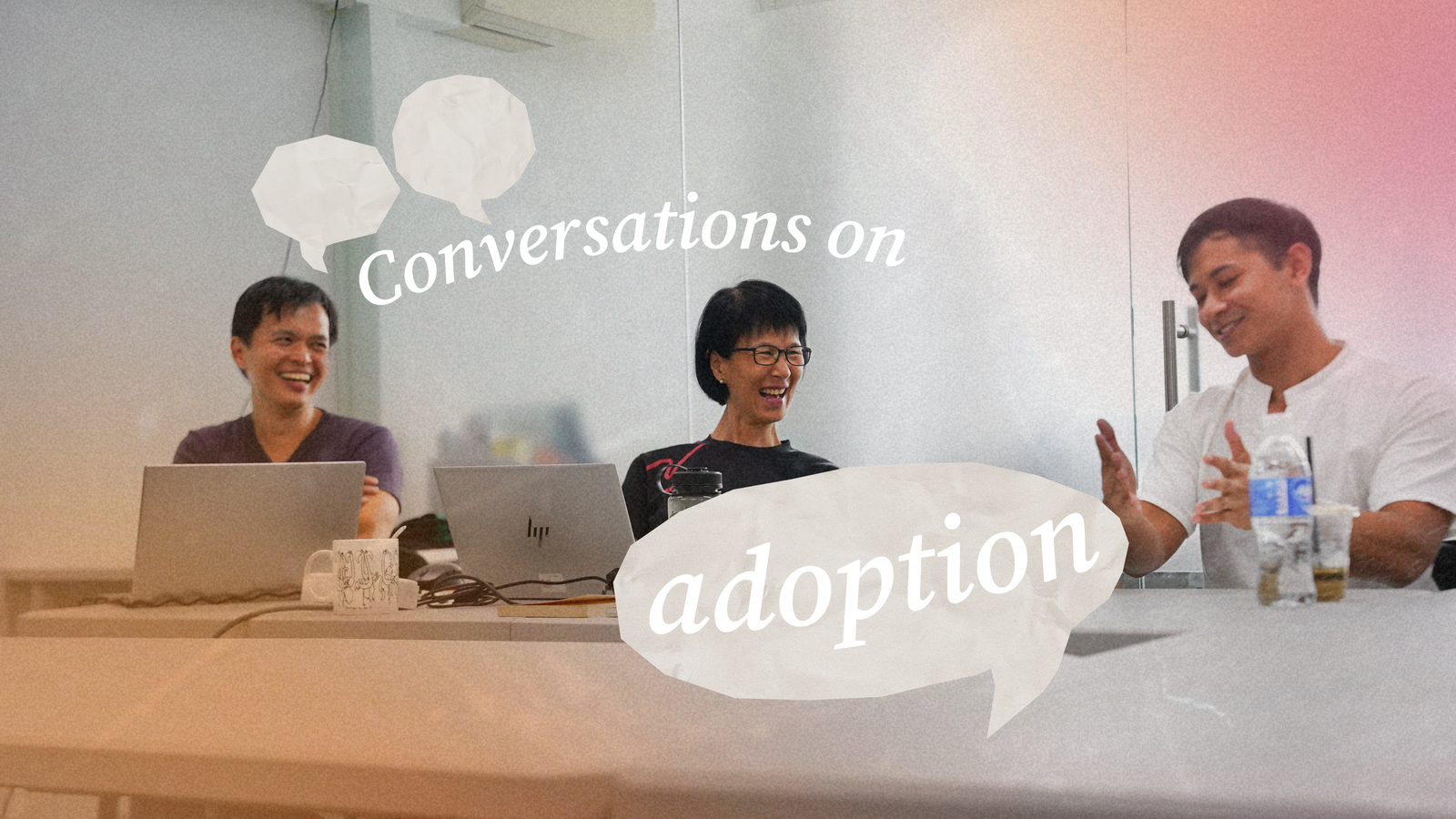
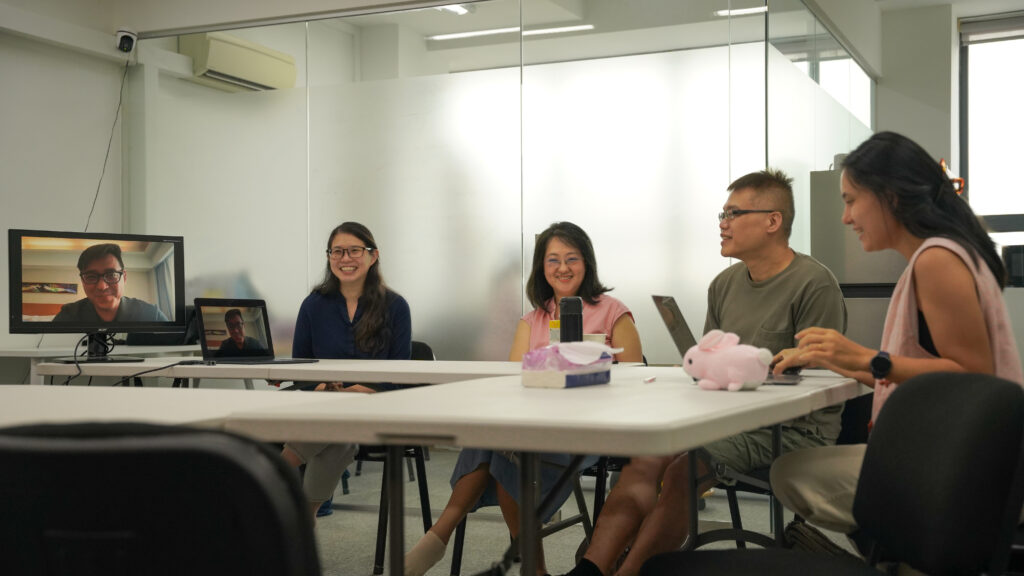
Cut to our cosy office, where father of eight Michael See looks around at the full room of curious individuals, and more than a few tired parents. Family life isn’t about having it all figured out. It starts with a simple question: “Do you believe?”
He and his wife Karen were one of two couples at our July Commune willing to go there: to share about their large families in a world that calls it “crazy”. The other: Anne Marie and Linus Koh, parents of six (the latter of whom joined via Zoom from overseas).
Family Values for Growth
Michael and Karen spoke openly about how their Christian faith shaped their views on family and how they raise their eight children, who are between the ages of six and 21. In their household, values are not just abstract ideals, but practical guides for daily life.
The first is the importance of role modelling. Rules apply to everyone, parents included. No phones are allowed at the dinner table – for adults and children. Under their principle of “gradual release of responsibility”, their child may use a handphone from Primary 1 for a total of 30 minutes. This includes messaging to report on safe arrival when she takes the bus to and from school. Breaking the rule leads to confiscation. Everyone in the family also helps with house chores from a young age, showing how the family plays as a team.
The Sees also draw a clear distinction between two sets of expectations. The expectations of the “World” (such as academic results, wants and material possessions), and the expectations of the “Word” (i.e. the Bible), such as effort, grace and service. While not dismissing academics, they refuse to allow it to become the primary measure of a child’s worth, focusing instead on cultivating kindness and effort.
Finally, they make effort to spend time one-on-one with each child or, if time is limited, then one-on-two. A firm 8.30pm bedtime for the children also protects time for the couple to be together. Their marriage is not an afterthought but a pillar of family life.
Journeys into parenthood
Interestingly, Karen See and Anne Marie Koh shared similar experiences in their early journey to parenthood. Both of them had been diagnosed with polycystic ovary syndrome (PCOS), which meant that they could have difficulty conceiving.
For Anne Marie, the diagnosis was particularly painful. She and Linus deeply desired children and the news came six months before marriage. As Catholics, they chose to “offer it to the Lord and just take things as they come”.
There were still difficulties ahead, causing hesitation about having more children each time. Their second child developed a very severe eczema. He was unable to sleep or go to school and had to be hospitalised for some time.
During the COVID-19 pandemic, Anne Marie experienced post-natal depression after having their fourth child. At times, she questioned whether she could continue on, let alone have more children. Her own mother also suggested she already had “enough” children.
Despite these challenges, the Kohs welcomed their sixth child last year. He brought so much joy to all including his grandparents; the family jokes about him being their “emotional support”.
As Anne Marie observes, “With every new addition, the love really multiplies.”
Enough Love to Go Around
With six children, the oldest of whom is currently in Primary 6, the Koh household has become a natural gathering place for children in the neighbourhood. “There is enough love in this family and enough things set up to welcome anyone and everyone,” said Anne Marie.
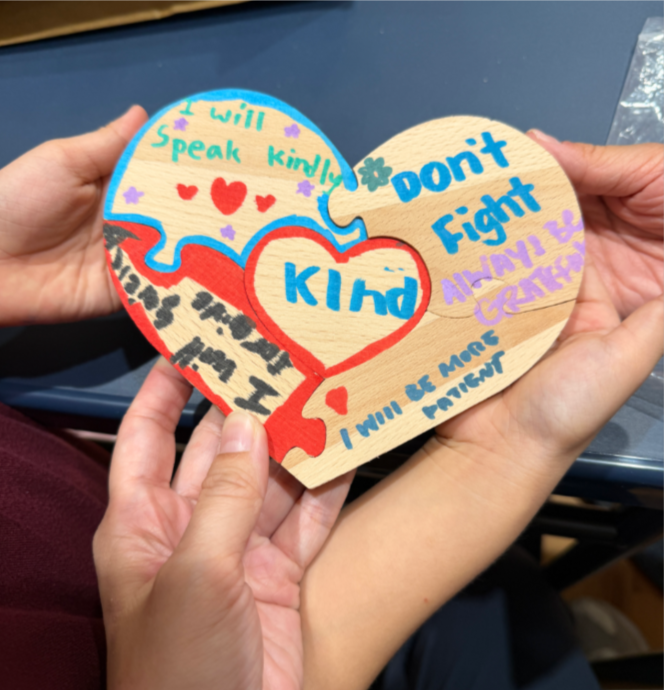
The values they emphasise reflect this openness: Gratitude, kindness, patience, and spending time together.
The Kohs have another quiet and firm conviction: as a family, “everyone gets to heaven”. This means that academic achievement is also not their main focus; instead, it’s about living a good life, contributing to society and being charitable. In a context dominated by rankings and measurable outcomes, this is a consciously counter-cultural stance.
How Much Independence for Children?
This question on independence sparked one of the most candid moments in the dialogue. One mother shared honestly about her fear of her “children being kidnapped and killed”, shaped by some high-profile local cases. She struggled to let her children take public transport on their own.
For Michael, faith plays into this tension. “Faith,” he said, “is not about holding on to everything.” He encouraged parents to reframe the issue.
“I urge people to think the other way. They are young, let them explore within their boundary, and you can stretch that boundary first. If you are not comfortable letting them make the whole journey home, can you meet them halfway? Can you meet them at an MRT station?”
Michael spoke of the joy he experiences as his children gain independence in different ways – such as when they tell him, “Don’t worry. We’ll take care of our own dinner.”
Anne Marie shared how her children began to take public transport on their own at Primary 3. There was a transitional period when she would accompany them to show them the routes. As her children attend the same school, the older ones now accompany their younger siblings. She likened parenting to flying a kite, “You have to let them fly when they are ready, and you have to hold them back when it’s necessary.”
A Pursuit Beyond Wealth
The conversation also touched on the tensions between different life choices and the narratives around them. A mother of three described her interactions with friends who have no children and live in private estates. While their lives appear comfortable and uncluttered, hers is often busy “chasing around three young kids”.
One participant, who identified himself as a “DINK” (dual-income no kids”) and a life coach, cautioned against romanticising either path. He shared how some DINKs he has coached ask, “I have so much resources, what do I do with it? How do I apply my time? How do I find myself?”
Throughout the discussion, it was clear that pursuit of financial, material or educational success was not the primary goal for either the Sees or Kohs.
The Sees are a single-income family. Michael is the sole breadwinner, working as a teacher. The family of ten lives in a jumbo HDB flat, and travel around mainly on public transport.
While they emphasise doing one’s best, Michael and Karen reject the education rat race, including heavy reliance on tuition and enrichment classes. For them, pursuit of “Word”-based values – effort, character, service – take precedence over external markers of achievement.
Linus and Anne Marie run a video production company, Saint Max Story & Media, which is a Catholic media apostolate. Linus was the camera director for the Papal Mass when the late Pope Francis visited Singapore in 2024.
Living in an HDB flat, they too find immense joy in things which are “really very simple”. In one instance, the Koh children decided to make their parents’ room look like a “hotel”, carefully straightening and tidying the sheets to resemble a newly made-up hotel room. On another occasion, when the Kohs were expecting another child, they invited their children to guess the sex of their new sibling – turning anticipation into a shared family experience.
“Love is spelt T.I.M.E.,” Linus said. As a father, he frequently reminds himself that what his children need most is not perfection or performance, but his time.