“Forever daddies and mummies must tell their children about their tummy mummies… Because children need to know where they came from,” said a message from an 11-year-old boy Zephaniah Lim to the Ministry of Social and Family Development (MSF), reported in the Straits Times.
At our latest Commune in September, Wong Wei Lei from TOUCH Community Services echoed the boy’s sentiment: Children should be told the truth about their adoption and birth parents.
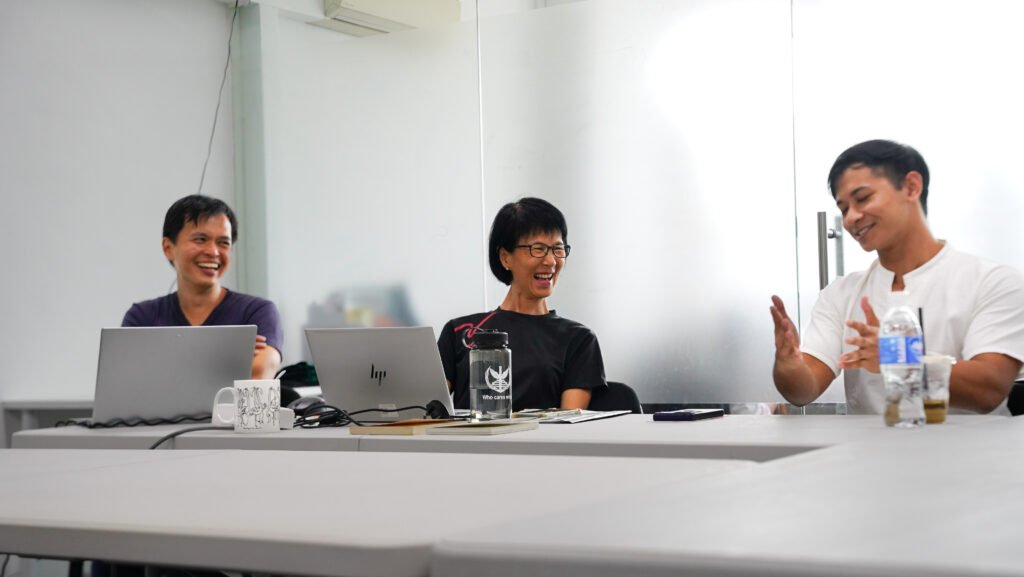
In this final Commune of 2026, we heard moving accounts of adoption from Wei Lei and Jaryl Wee, a 23-year-old young man who was adopted when he was a baby.
A Life-giving Institution, Amidst Profound Loss
Wei Lei opened the Commune with an overview of Singapore’s adoption framework and laws, including amendments to the Adoption of Children Act in 2022 to strengthen children’s welfare. Under the new framework, a couple must attend pre-adoption and disclosure briefings, and obtain a favourable Adoption Suitability Assessment (ASA) before applying to adopt.
As a TOUCH social worker, Wei Lei’s briefs, counsels and conducts ASAs for potential adoptive parents.
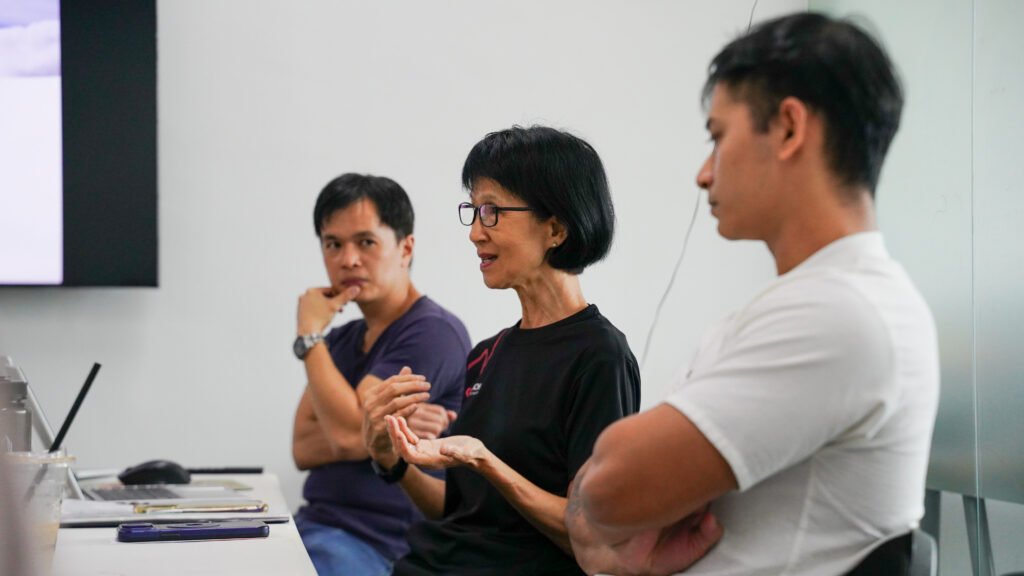
Her guiding principle: “the best interests of the child”. Adoption, she emphasised, is to find “the best family for a child”, rather than “for a couple who wants a child.”
A key part of her work is helping parents decide when and how to disclose adoption to their child. As an adoptive parent herself, she understands the challenges involved and advocates for early disclosure.
She likened a child’s life story to building blocks: If parents delay telling their child about their adoption, it is like placing the first block, covering it with a cloth, then building ten other blocks on top. Disclosure is “almost like gingerly pulling out the cloth and mak[ing] sure all the ten blocks still stick”. This is virtually impossible. “Many blocks will fall, and they have to build all over again.”
Wei Lei chose early disclosure of adoption, addressing her child’s emotions and questions as they came.
In contrast, adoptees who only learnt of their adoption status in adulthood may feel as if everything they believed about themselves has changed.
Although adoption gives children “forever families” (i.e. the adoptive parents and family), it also involves separation and loss. These children may feel different from their forever families, long for the relationship they might have had with their birth parents, or struggle with the lack of genetic connection. In multiracial adoptions, visible differences may add to these feelings.
Sometimes, adoptees feel a sense of confusion about their identity and their place within family and society, Wei Lei added.
Journey of Finding One’s Identity
Jaryl Wee was more than familiar with many of the challenges highlighted by Wei Lei.
Growing up in a Chinese family, he struggled with his skin colour being different from his parents. Classmates teased him and suggested he was adopted. Initially, he laughed those insults off; his parents had suggested that his skin colour was a result of his swimming lessons.
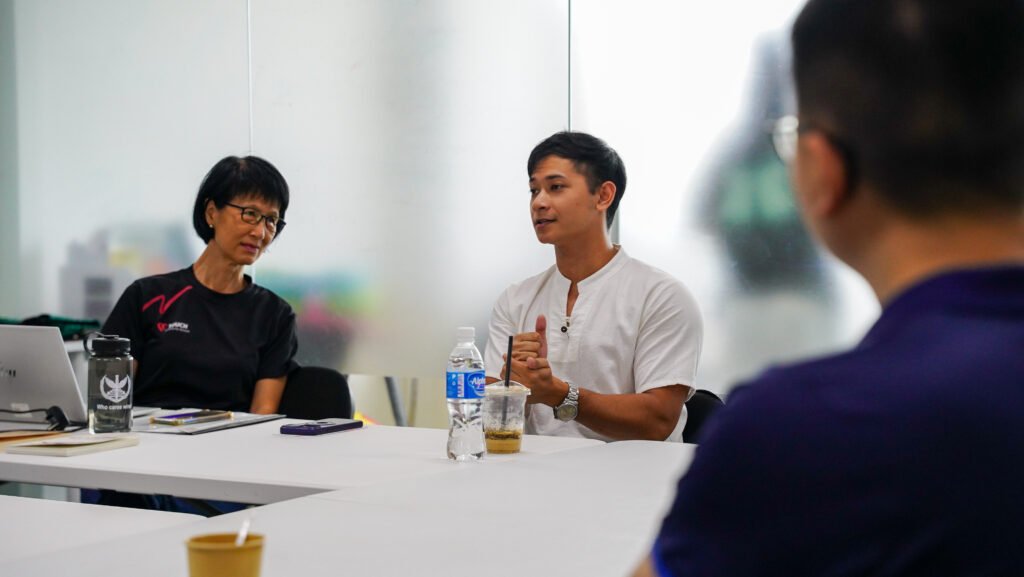
After a major argument with his parents, Jaryl ran away from home. While away, he had a mental image of a baby left on the streets, which he believed was a vision from God.
When his mother called after finding his note, he asked, “Was I adopted?”
“Yes,” she replied.
At first, Jaryl felt as though his entire childhood had been a “lie”. Yet unexpectedly, this truth gave him peace instead of an identity crisis.
As Wei Lei explained, adopted children in Singapore receive a new birth certificate upon adoption with no indication of their adopted status – except, sometimes, their place of birth.
For Jaryl, the clue was Myanmar, his birthplace. Years earlier, while visiting Myanmar, Jaryl’s parents had passed by a government-run orphanage that took in abandoned babies, many of whom were left for dead or would be taken in by gangs. There was no record of his birth or birth parents. Inside, his parents saw a baby, second from the extreme right, and felt an immediate connection. As Christians, they returned to their accommodation to pray before returning the next day.
A government minister visiting the orphanage supported their wish to adopt. With his help, they brought baby Jaryl home to Singapore.
Given his age and the circumstances of his abandonment, Jaryl had virtually no chance of finding his birth parents.
But if he could meet them, he would tell them: “I want you to know that I forgive you… I want to tell you that my life is so amazing.” He had found joy, peace and faith.
Music became one way for Jaryl to express himself. He wrote “Resolve”, a song wrestling with his adoption story and finding reconciliation. It is https://open.spotify.com/track/4GevxrSiPBgibbNfzVCHZi available on Spotify. (Lyrics at post-script below.)
“Being Parents to a Child Who Needs Parents”
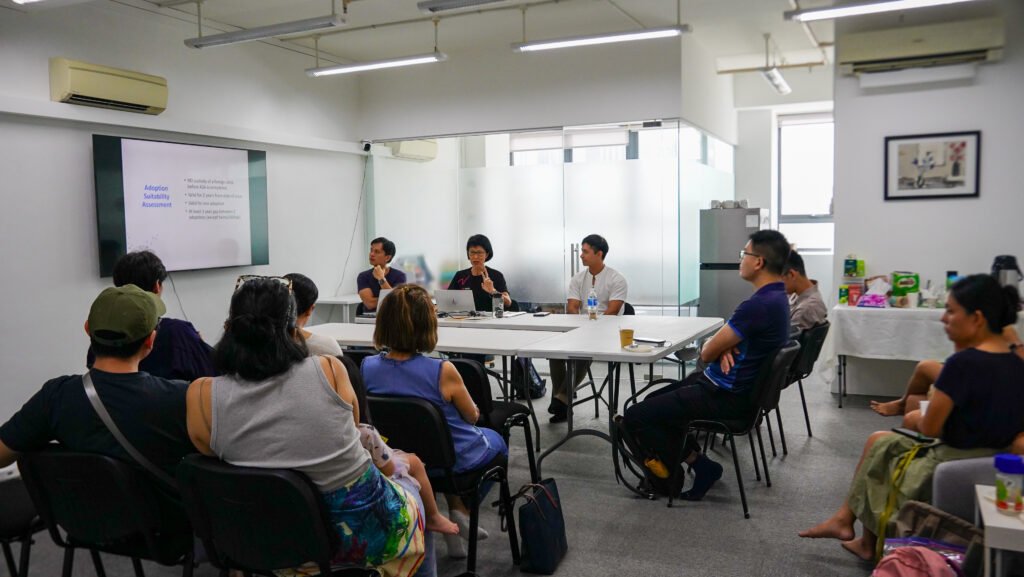
The ASA is a new process introduced under legal changes in 2022, replacing the previous Home Study Report. During the discussion, participants asked about the ASA process, and how couples could be assessed “unsuitable”.
Wei Lei explained that the ASA takes a holistic view of a couple’s readiness to adopt. Social workers consider factors such as the stability of the marriage, mental stability, disciplinary methods (e.g. corporal punishment), whether both husband and wife want to adopt, and more. Sometimes, only one spouse wishes to adopt, and the other does not.
She reiterated that adoption must always centre on the child’s best interests: it is about “being parents to a child who needs parents,” not finding children for adults who want one.
“For me, it’s a very serious thing to tell somebody ‘You’re not fit to be a parent’.” When an unfavourable ASA outcome seems necessary, the social workers involved will usually hold case conferences to discuss matters thoroughly, before communicating their assessment sensitively.
In some cases, couples are encouraged to seek counselling first. For example, a couple might still be grieving their inability to conceive, mistakenly believing that adoption will “solve” that grief. Some couples return for ASA after counselling.
Speaking from the child’s perspective, Jaryl stressed the importance of allowing children to process the emotions from learning of their adoption. He described the grief as both “healthy and good,” stressing that a child’s identity should not be built on “deception”.
Jaryl was convinced of adoption’s lifegiving value since 16 (before he found out he was adopted). Having discovered his own story, he is even more passionate about it today. “If I had the chance, I would like to adopt kids in state care.”
He acknowledged that adopting older children who have experienced hardship and know of their birth parents may bring more challenges. Yet it is precisely these children he is drawn to help.
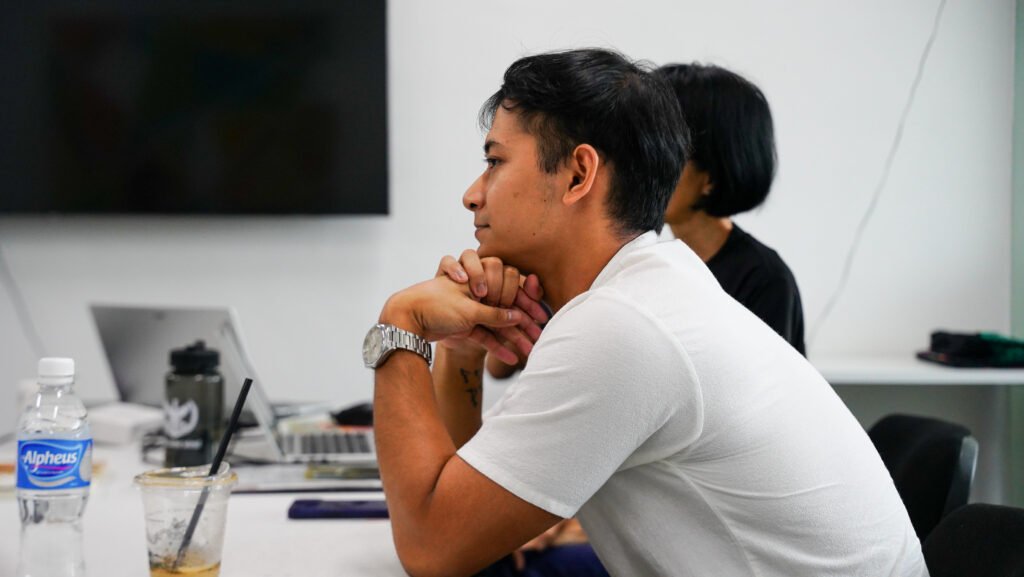
Post-Script
Here are the lyrics of the song “Resolve” by Jaryl Wee, sharing about his feelings of abandonment, adoption, forgiveness towards his birth parents, and finding resolve through his Christian faith:
I am a child of parents that I haven’t met
I am a voice crying with nowhere to lay my head
My thoughts encamp around me
“You’re worthless, You don’t belong”
I waited for a lullaby but you didn’t sing me a song
Why did you leave me?
Was I that hard to love?
Can life have meaning
If loving me wasn’t worth?
In the dark of night I fight the feelings,
Anxious thoughts consume my soul
Knowing every heartbeat was pain
But a Love persists to find this story,
Hope that took away my pain
Given me a voice to sing
I’m deeply treasured
Loved in spite all mistakes
To Mom and Father
Here’s what I wanna say
Know that I’m doing well and I forgive you
The choices you made were hard and I don’t blame you
I hope you found a joy in your heart, the child you bore received a new start
If only I could find you I’d say
Be free of the guilt in your heart
I found my resolve and I hope you find yours
Find peace in the comfort of Grace
My God Still forgives and I’ve chosen His way
Be free of the guilt in your heart
I found my resolve and I hope you find yours
Find peace in the comfort of Grace
My God Still forgives and I’ve chosen His way