Love so strong, it stays in the afterlife.
The 2025 film Eternity offers a strikingly original meditation on love, loss, and commitment. Rather than portraying the afterlife as reward or punishment, it imagines Eternity as a choice. Souls must decide, once and for all, where and with whom they will remain.
Meet the characters:
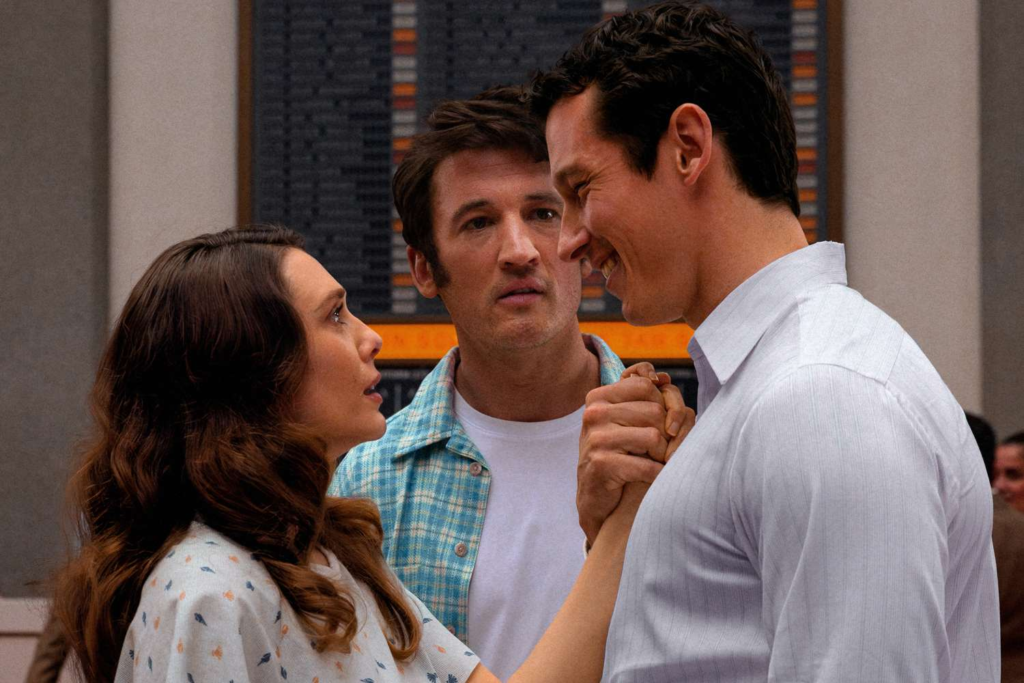
Joan (Elizabeth Olsen), a woman forced to choose whom to spend eternity with in the afterlife
Luke (Callum Turner), Joan’s first husband who died at war
Larry (Miles Teller), Joan’s second husband of 65 years
Happiness: A key premise of Eternity
A key part of the movie is that souls revert to the age at which they were happiest. Luke’s happiness was tied to the dream of beginning a family. Larry’s was anchored in fatherhood and shared responsibility.
Happiness, the film suggests, is not self-indulgence but rootedness: belonging to someone and building life together.
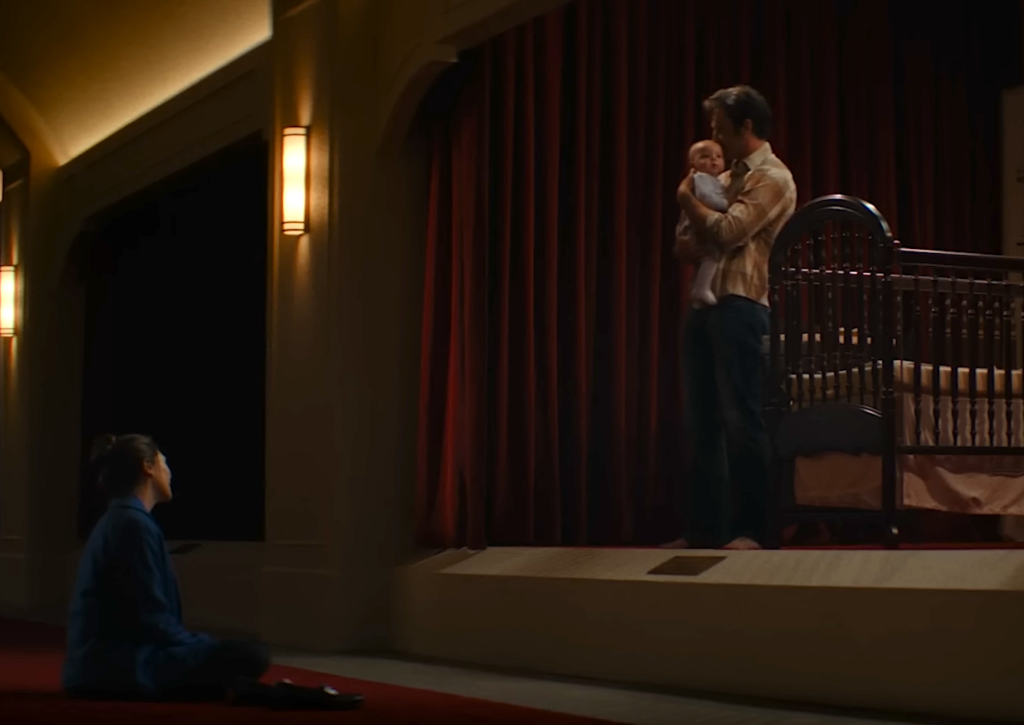
In one scene, Joan entered a theatre-like hallway, seeing past versions of her with her first and second husbands at different life stages.
In their short-lived romance, she saw the gruelling moment when she said her last goodbye to Luke, never to return from war. She saw car rides and cherishing quiet moments with Larry and their first baby.
Love that lasts
Eternity dares to ask whether love is defined by intensity or by endurance.
Larry and Joan’s 65-year marriage was not glamorous.
It included arguments, disappointments, financial stress, illness, and the slow erosion of youthful excitement.
Yet it was precisely in those shared decisions (raising children, navigating loss, persevering through seasons of weariness) that their bond deepened.
Marriage here is shown not as a lifestyle accessory, but as a long-term promise that generates resilience and social good.
Care and commitment to those around us
Eternity gently invites us to reflect on how we care for the people entrusted to us. Marriage, parenthood, friendship, and caregiving are not simply roles we pass through while pursuing other goals. They are the relationships through which we shape our character and contribute to the well-being of others. A culture that values these commitments recognises that the health of society depends not only on economic success, but on the quality of our bonds with one another.
This becomes more than entertainment; an invitation to examine our worldview.
What does it mean to live well? What kind of love endures when the excitement fades? And what choices today will we wish to return to, if we were given the chance to revisit the Archives of our own lives?
Stories like Eternity create space for these reflections, reminding us that the most meaningful lives are often built through quiet faithfulness to one another.
The power and steadfastness of marriage
In the end, we’re reminded that culture is shaped by the stories we tell about love.
If marriage is portrayed merely as a romantic high, it will not withstand suffering.
But if it is seen as a promise that weathers illness, disappointment, and the slow passing of years, it becomes a stabilising force for generations.
That is why this story matters. It invites us to see that enduring love—ordinary, faithful, imperfect—may be the most extraordinary choice of all.