In 1971, Parliamentary Secretary to the Minister for Culture Inche Sha’ari Bin Tadin gave a speech critiquing the trend of low-income large families living in smaller flats. He spoke of “the vital importance of family planning, the need to keep a family small in order to maintain a high standard of living”, calling upon Parliament to “eradicate the old concept that large families are a sign of prosperity”.
As a former teacher and principal, he stressed the importance of quality education, since “education is all-important to a young and vigorous Republic determined to speed ahead.”
In place of “traditional practices which hinder progress”, he called for “achievement-orientated values”, and a citizenry “motivated to reach the top”.
Such was the thinking of many within the government at the time when Singapore pursued population control in earnest, launching the well-known “Stop at Two” population control campaign in 1972.
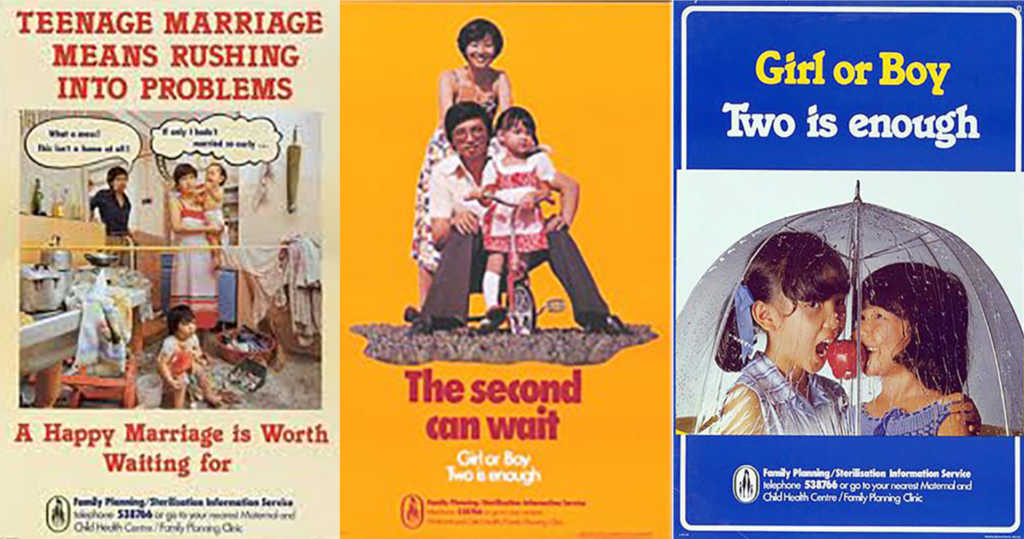
Today, we still face the consequences of the campaign, as Singapore hit a record-low total fertility rate (TFR) of 0.87 in 2025, far below the rate of 2.1 needed for the population to replace itself.
Yet, this 1971 the speech may hold some important solutions to reversing our low TFR today… if we do the opposite of what was suggested.
1. Success and standard of living: How much is enough?
The ideas preached by Inche Sha’ari Bin Tadin in 1971 about the importance of “achievement-orientated values”, and of citizens “motivated to reach the top” to obtain “a high standard of living” are the reality of the Singaporean mindset today.
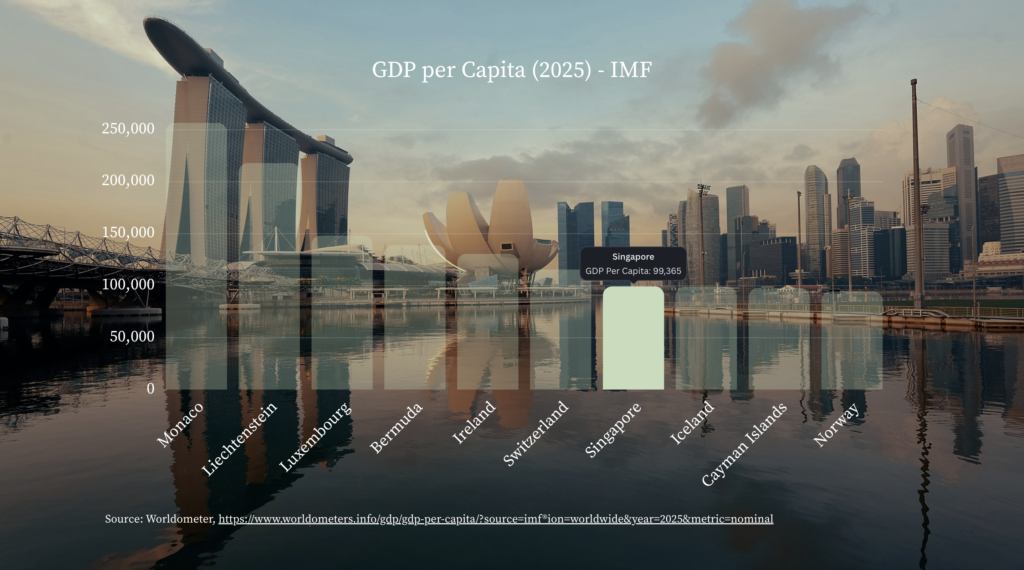
Even though Singapore has rapidly progressed from “Third World to First” since the time Mr Sha’ari spoke those words, the prevailing mindset has not changed. Singaporeans are still in continual pursuit of success and an even higher standard of living in a country which ranks among the top ten worldwide in GDP per capita.
As a debate over a 2023 “Minimum Income Standard” study showed, Singaporeans are debating how much is enough for local households, including whether jewellery, perfumes and overseas holidays are “luxury” items or simply part of a basic standard of living here.
And here’s the irony: The same economic success-driven mindset that drove population control now threatens to undermine Singapore’s economic success in the long-term due to population decline.
With a citizen population that is projected to decline by the 2040s, our local workforce will shrink and – in the words of Minister Indranee Rajah – it will become “increasingly challenging to maintain our dynamism, attract global businesses, and create opportunities for the next generation”.
From a societal and policy standpoint, we need to recalibrate the balance between short- and long-term economic growth, the latter of which is heavily affected by population trends.
As individuals and as a collective, we need to confront the moral and philosophical question: How much is enough?
2. Housing: Houses for families, or families for houses?
Housing is a perennial challenge in land-scarce Singapore, yet remains critical to fertility decisions in society. For a population where close to 80% of the population stays in HDB flats, the government plays an important role in resolving the housing challenge.
Here’s a fundamental question: Should the government build houses for families, or adapt families to fit into houses?
One unfortunate idea put forward in the 1971 speech above was to shrink the sizes of families in order to fit into the small HDB 1-room flats, rather than to build larger houses for larger families.
As a matter of reality today, houses here are getting smaller. In the 1980s and 1990s, 4-room flats were around 100-105 sqm while 5-room flats were around 120-123 sqm. However, from 2000 to 2020, the size of new HDB flats remained constant with an average of 90 sqm for 4-room flats and 110 sqm for 5-room flats; this is a decrease of around 10% in size.
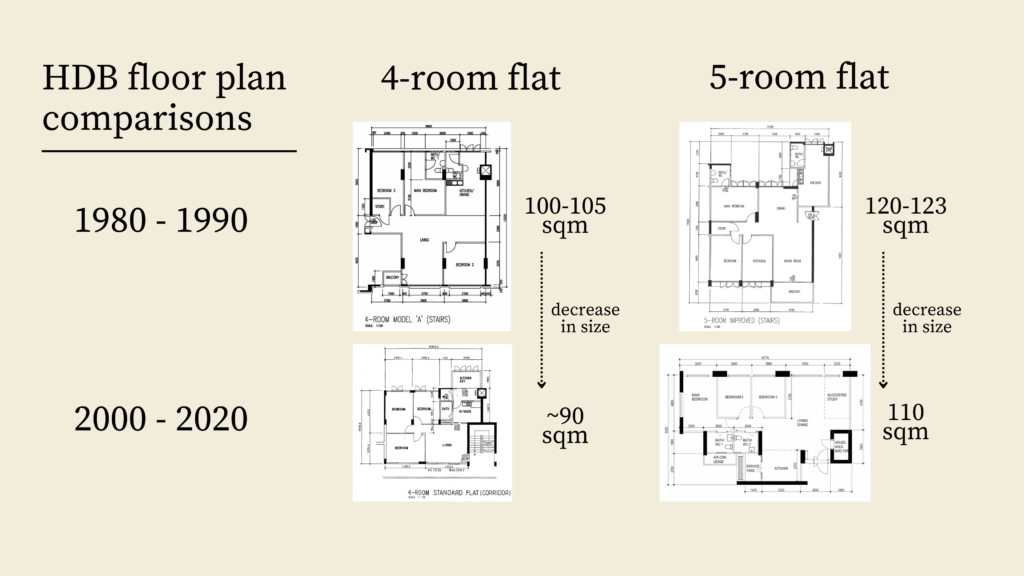
While it is true that the average household size in HDB flats has also decreased with a growing number of people – including elderly – living alone, what are the options available for larger families (including multi-generational families), or for families that are aspiring to grow in size by having more children?
It is time to create larger homes for larger families. Options include bring back discontinued larger apartment types such as maisonettes and jumbo flats, allowing large families to buy HDB flats side-by-side with exemption from Additional Buyer’s Stamp Duty (ABSD), or granting large families priority to ballot for adjoining units in Build-To-Order (BTO) HDB flats.
3. Education: An “arms race”?
There is no doubt that Singapore’s education system is world-class, and has been a major reason why Singapore was able to “speed ahead” as a young Republic in its early years.
A 2008 book published by the World Bank notes that “Singapore’s economic success since independence in 1965 owes much to its leaders’ ability to establish, through the education system, a close link between policies for skills formation and the demand for skills at each stage of economic development”.
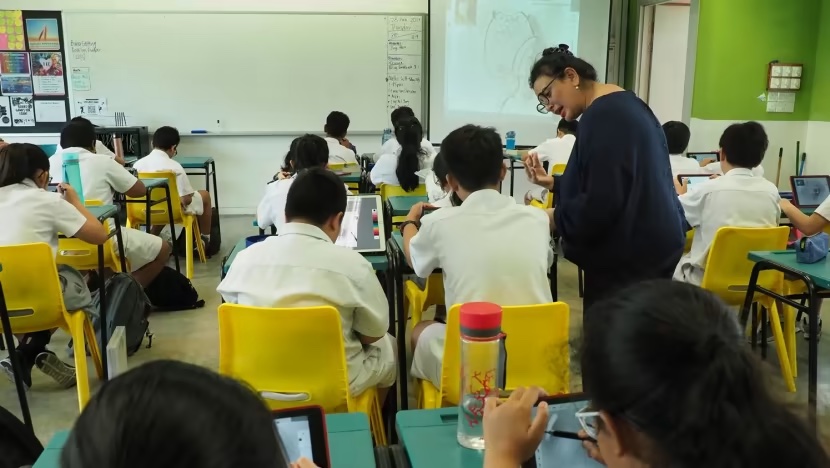
While education is a good thing, the overemphasis on success in education has led to an “arms race”, creating a hyper-competitive environment where parents invest time, energy and resources to ensure their children excel in grades and achievements.
Here is one staggering statistic: Even as birth rates continue to fall, the amounts Singaporeans are spending on private tuition has skyrocketed. In 2023, Singaporeans spent $1.8 billion on private tuition, compared to $1.1 billion in 2013.
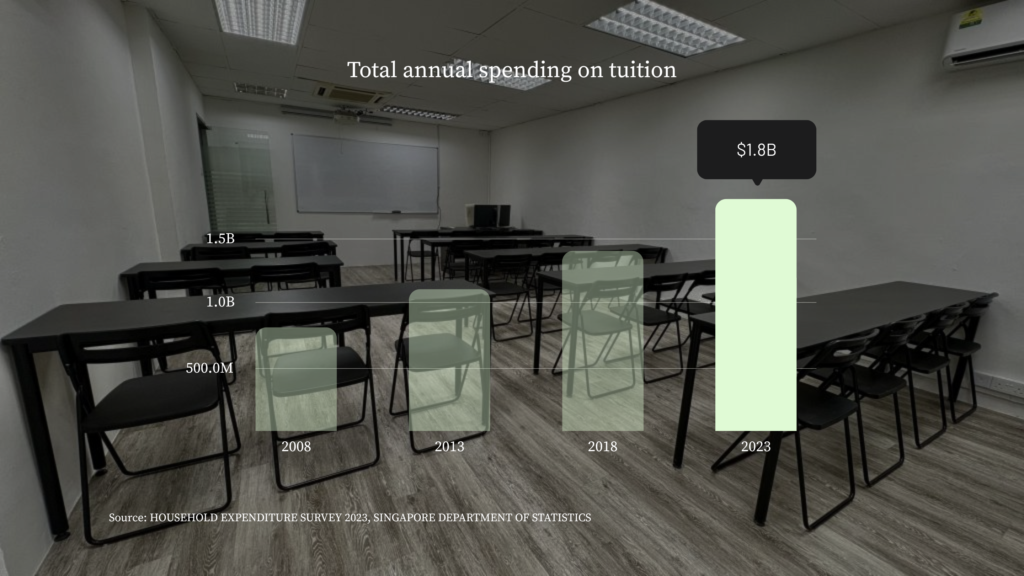
As the government recognises, this “arms race” raises the cost and pressures of parenting, which negatively impacts the fertility rate.
Thus, in recent years, the Ministry of Education has rightly sought to break away from this “arms race”, in favour of more “holistic development”. Prime Minister Lawrence Wong has also advocated for “different, multiple pathways of success”.
But changes in the education system alone will not suffice, as long as employers, parents and others in society still feel the need to focus on academic achievement and narrow conceptions of success. A wholesale shift in societal mindset is needed.
4. Large families: A sign of prosperity or poverty?
In today’s Singapore, the concept that “large families are a sign of prosperity” has clearly been eradicated in the minds of most Singaporeans.
Some examples of such thinking can be seen from one Reddit thread commenting on a Straits Times (April 2022) article “Feeding 8 kids on $300 a week: How big families cope in a time of rising costs”. One of the criticisms against the family with eight children went: “Are we supposed to praise them for being irresponsible to their children? If you don’t have the ability to provide adequate care for your children, why bring them to the world to suffer on behalf of your poor choices(?)”
Although financial cost remains the top-of-mind factor that discourages many Singaporeans from childbearing, the perception of loss associated with parenthood goes even further today. For those who value “childfree” lives, parenthood is associated with negative impacts to one’s lifestyle, career and having to adjust one’s lives for the sake of children.
Values of Singaporeans have shifted so dramatically since Singapore’s early years, such that few locals would even aspire to have large families. According to our 2024 survey, only 24% of married respondents say that three or more children is ideal, and less than half of that number (10%) actually have three or more children.
To reverse our low TFR, a wider societal shift in values and priorities is needed, to reembrace the value of marriage and family life. To quote Assoc Prof (Dr) Tan Seow Hon, “[a] root and branch overhaul of the understanding of the place of marriage and family in human flourishing, and therefore, in the state (which is secondary to the individual), is necessary.”