“You just begin. You do the math. You solve one problem, then you solve the next one, and then the next. And if you solve enough problems, you get to come home.”
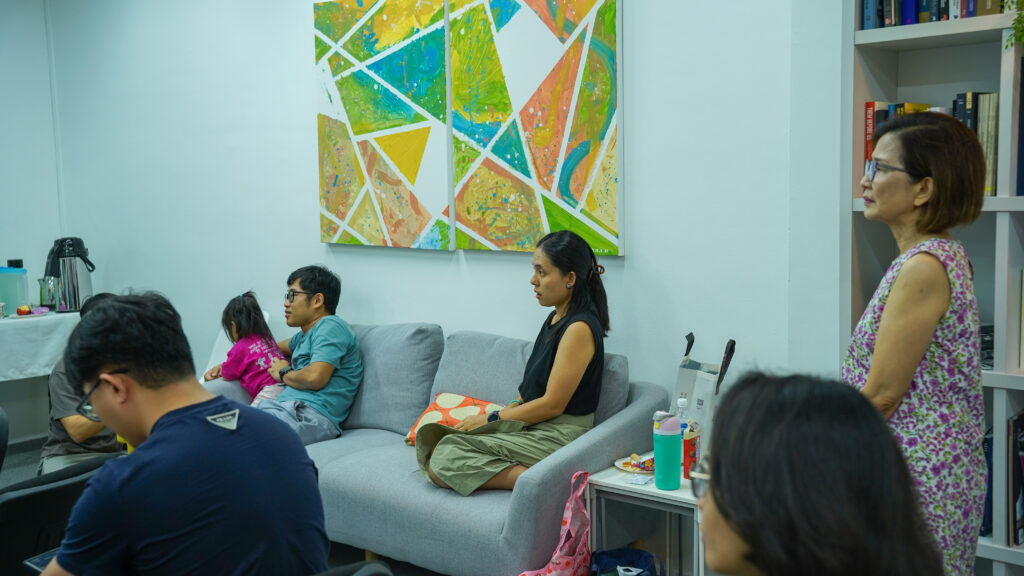
Colin Ng summed up his philosophy and approach towards his family situation, using the above quote from his favourite film The Martian (2015), starring Matt Damon. He was one of two speakers who shared at our Cultivate Commune on 16 May on the topic of “sandwiched families”. A product leader with extensive experience at companies such as Grab and Western Union, Colin and his wife care for a son and three elderly parents. Our other speaker, Xue Ting, is a lawyer and mother of three, with an elderly mother who has been living with Alzheimer’s disease for many years.
Demographic challenges
The growing challenge of being “sandwiched” arises from delayed marriages and parenthood, low fertility rates and a rapidly ageing population.
Beginning with this frank look at Singapore’s demographic realities, research and policy lead Daniel Lim assessed: Demographically, the risk of acute sandwiched family struggles rises with two or more generations of delayed marriage and parenthood.
There are various definitions of what it means to be “sandwiched” as a couple. As Cultivate SG has analysed, this can mean either:
- Living with both young and old;
- Living with or nearby to both young and old;
- Living with or frequently providing money or care to both young and old; or
- Caring for both young and old.
Although life expectancy in Singapore is approximately 84 years, our average health span is around ten years less than that, which means that – in the words of Health Minister Ong Ye Kung – “the average Singaporean suffers ten years of ill health before passing away”.
If people and families delay marriage and parenthood for more than two generations, Daniel reasoned, they increase the likelihood of a situation where they will have to take care of both their young children and their elderly parents at the same time.
Treasure life, embrace the unknown
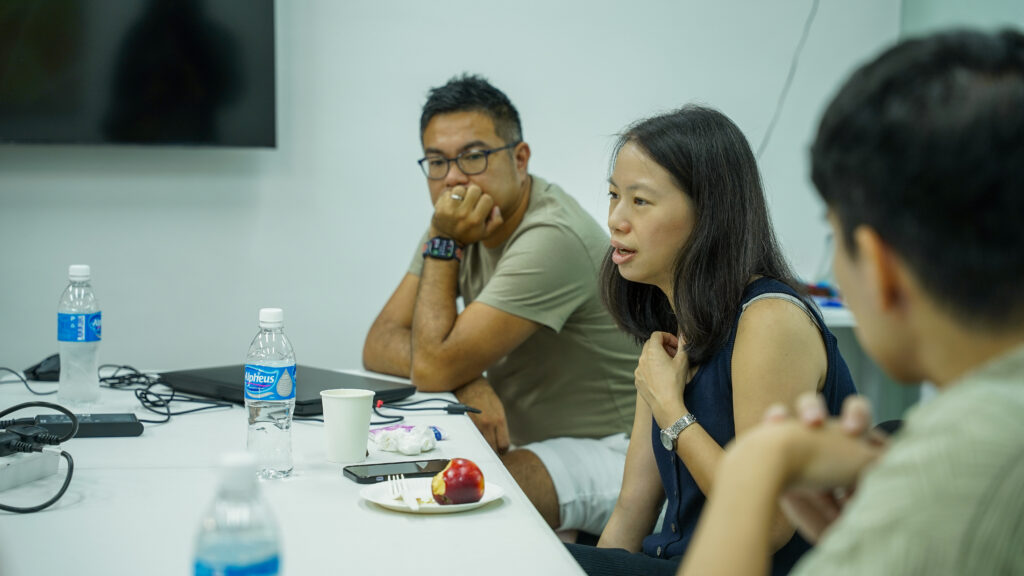
“Do the best you can. Roll with it,” Xue Ting summed up her personal approach. While recognising the pressures and time demands of the situation, Xue Ting felt that the term “sandwiched families” may create a lot of anxiety in people, focusing on the pressures of caring for children and elderly parents. Yet “these are things that we can’t change, that are beyond our control.”
Seeing her ageing mother with Alzheimer’s becoming more “lifeless” felt like a “stark juxtaposition” with young children whose brains are developing and are becoming more “lively”.
While it is difficult to watch the regression, “it makes you treasure life more.”
This was how she chose to focus on the value of family, and how it is a privilege to be able to love one’s parents, take care of children and experience the joy of having one’s own family. It is why she decided to have three children, even though her mother has Alzheimer’s.
“Having children brings joy. It reminds you of the value of life.”
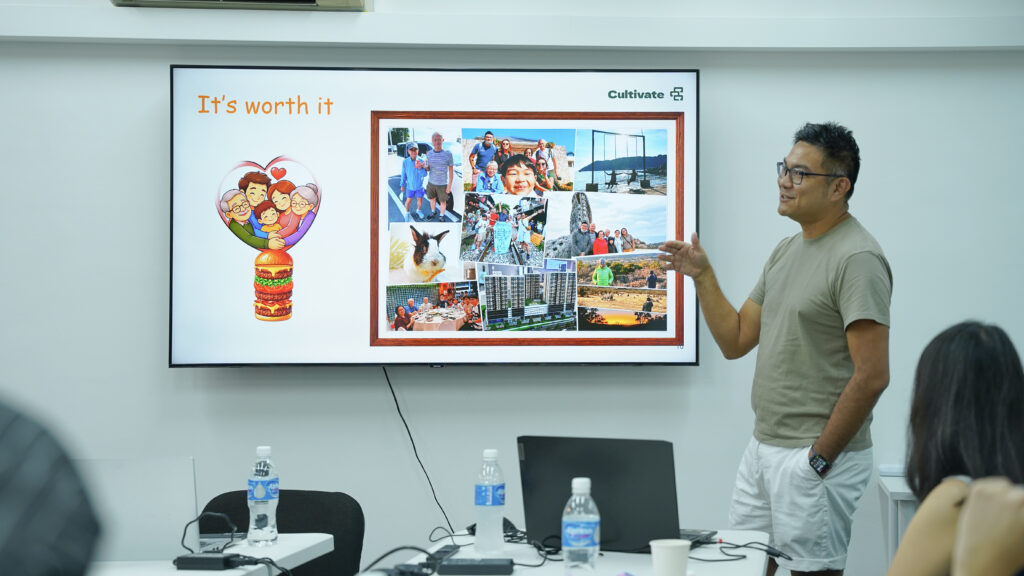
Colin, on the other hand, prefers the term “burger family” instead of “sandwiched family”. Guided by his philosophy of solving one problem at a time, Colin’s “burger” started with his wife and son, going through various health and relational challenges.
Then came the challenges with his parents and in-laws, resulting in a situation where all have now moved in to live under one roof with his wife, son and domestic helper.
It began when his mother-in-law battled cancer for six years before passing on. Colin invited his father-in-law to move in, and his parents also moved in sometime after.
His mother also faced health issues, being diagnosed with breast cancer. Choosing between medical options in the face of a “life-and-death situation” came at great financial cost, which Colin tapped on a bank loan for help. His father also appears to be in the early stages of dementia.
Even with many people under the same roof who carry different values, beliefs and sometimes, “no social filter” – there may be underlying joys.
Travel was one source of joy. Together with his wife, son and his son’s grandfathers, they travelled to places like Okinawa, Taiwan and South Africa. As his mother is unable to take an airplane flight because of a heart condition, she joined Colin and family on road trips instead.
Another meaningful experience involves the multi-generational interaction, where the three grandparents spend time with their grandson in different ways. For example, one might help with Chinese reading and dictation, another with Chinese writing, and another with Mathematics.
“Life is meant to be a journey. And on that journey, you make different choices.” “Embrace the unknown,” he said.
Importance of community and other support
In a frank discussion about the challenges of caregiving, Xue Ting related that her mother’s helper has two days off a month. While it is good for the helper’s wellbeing, it also creates some challenges since her mother cannot be left alone. Caregiving options were all pricey, charging on an hourly basis. The cost of a part-time caregiver for just two Sundays a month, was almost enough to hire another full-time helper.
She added that she had looked at government grants, but these are insufficient to cover the additional costs. One possible solution, in her view, is for the government to support a pool of part-time relief caregivers to help people in her situation.
When asked about the process of her mother’s cognitive decline, Xue Ting recalled that her mother was always in denial about having dementia, leading to arguments with her children who tried to convince her otherwise.
“I learnt later that actually it was a mistake. Maybe it’s enough that we know. We don’t have to keep forcing her to admit it,” Xue Ting reflected.
On the other hand, Colin’s father was not clinically diagnosed. Father and son have had conversations about the older man’s memory not being so good, and that he should get tested for dementia.
In this journey of family life, Colin emphasised the importance of community. In his case, he found community in the stay-home fathers at The Ordinary Dad. The idea is like that of a village where there is room for self-care and mutual support.
“Finding people that you can feel comfortable with, and share your journey with, is important.”